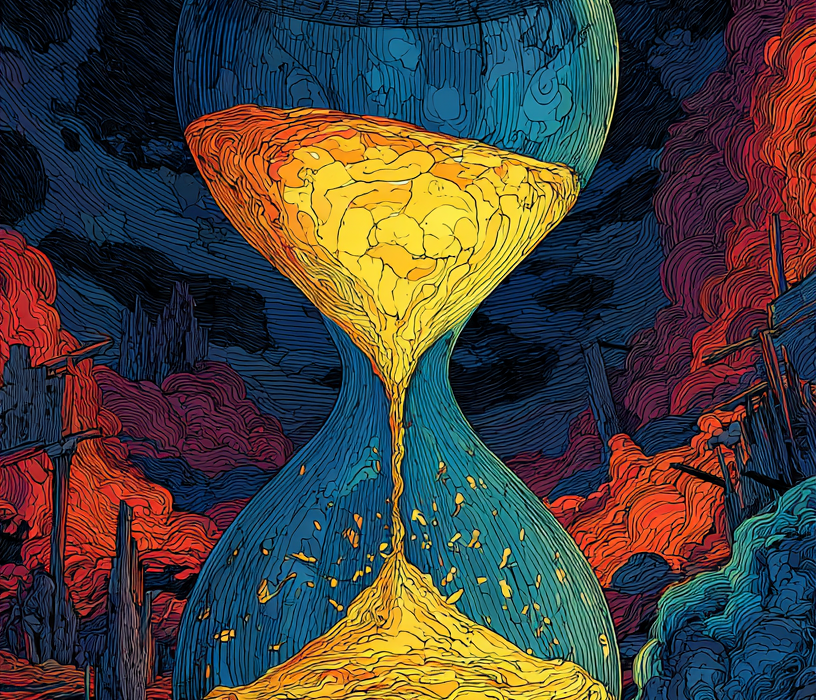
You Think You Have Time — The Illusion of Permanence
Posted in :

You Think You Have Time (But Life Is Already Moving)
There is a particular kind of pain that only arrives late — the realization that something mattered more than you knew, and that you treated it like it would always be there. The illusion of permanence is what psychologists call it: the quiet assumption that things will stay as they are, that people will remain who they were, that there will always be more time to say what needs to be said. There won’t. There isn’t. And the thinkers who understood this most clearly — Seneca, Jung, Kierkegaard — all arrived at the same warning: what you delay becomes what you regret.
What the Illusion of Permanence Costs You
Seneca watched his contemporaries spend their lives accumulating, planning, postponing — and wrote with barely contained frustration that the problem was never the shortness of life but the waste of it. He wasn’t describing laziness. He was describing the specific human tendency to treat time as a renewable resource, to assume the important things can wait while the urgent things get handled first. Kierkegaard framed it differently — as a failure of inwardness, of never truly inhabiting your own life because you’re always preparing to live it later. Jung believed that what you refuse to face consciously doesn’t disappear; it slips into shadow and shapes you from below, unseen. Letters from a Stoic by Seneca is one of the most direct books ever written on this subject — not motivational, but honest in the way that only someone reckoning with mortality can be.
The Six Lessons Life Teaches Too Slowly
1 – The coffee gets cold. Small moments don’t wait. If you are always rushing toward what’s next, you miss the quiet texture of what’s actually happening — and that texture is most of life.
2 – Interest fades. Nietzsche understood this: energy is a flame, and flames go out when unattended. Relationships, creative work, and passion don’t survive on promises of future presence. They survive on presence now.
3 – Day turns into night. Time moves whether you engage with it or not. Jung was unambiguous — you either face your life consciously, or it slips past you while you were busy performing it.
4 – People grow. Sometimes in directions that no longer align with yours. Psychology is clear that growth requires leaving old versions of yourself behind, and that includes old versions of your relationships.
5 – People age. You included. Every year that passes without full engagement is not just time lost — it is life avoided.
6 – Life passes. And it never rewinds. The reel doesn’t loop. What was missed stays missed.
The Shift: Attention as a Practice
The antidote to the illusion of permanence isn’t urgency — it’s attention. Not the frantic kind that rushes through experiences to collect them, but the settled kind that actually lands inside a moment and stays. This is harder than it sounds because modern life is structured around distraction, around the next thing, around optimizing for a future that the nervous system never actually gets to experience. Paying attention now is a quiet act of resistance against all of that.
What You’re Really Postponing
The only thing more painful than losing time is arriving at the end of it and realizing you never fully inhabited what you had. That recognition — delayed for years, sometimes decades — is what Seneca spent his life trying to prevent in others. It’s also what makes his work feel, even now, like it was written yesterday. Man and His Symbols by Carl Jung offers a companion perspective: the idea that the unlived life accumulates inside you, pressing for expression, until the moment you finally choose to listen. Both books ask the same question, from different directions. Are you paying attention — or are you waiting for a better time to start?
The full reading list for this topic is at themindofthemasters.com — every book mentioned here, organized by theme.