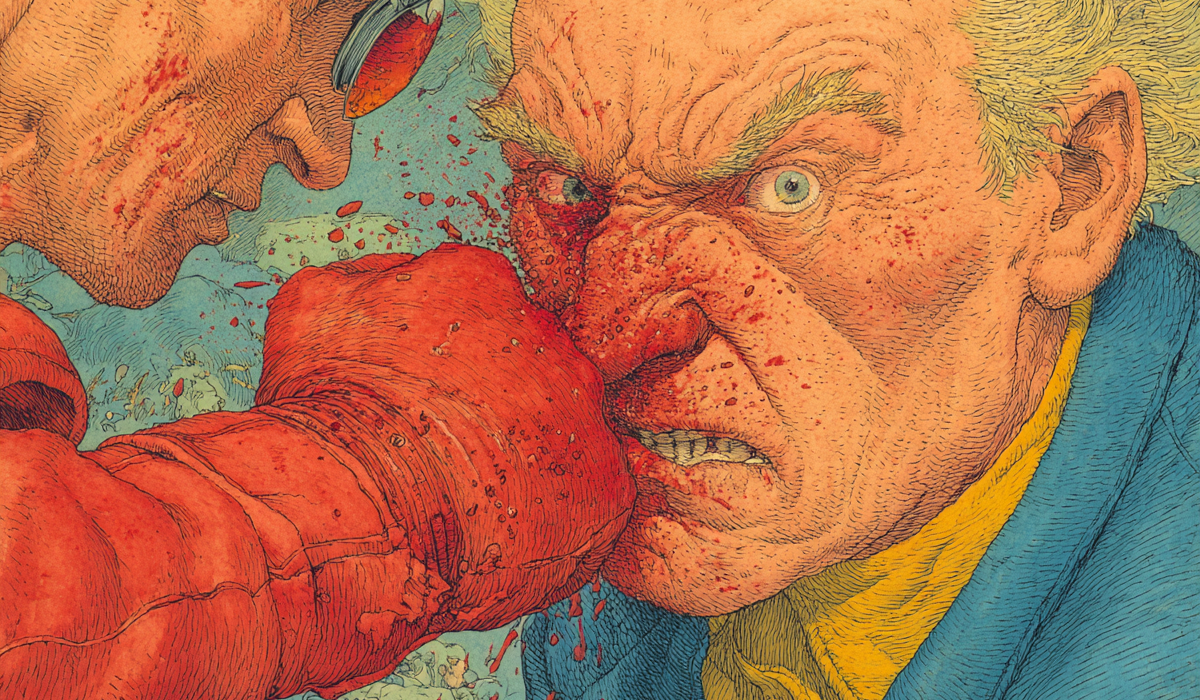

Everyone has a plan until they get punched in the face. Most people quote Mike Tyson to mock Stoicism — to say that philosophy collapses the moment real life shows up. But they’ve got it exactly backwards. The Stoic mindset isn’t built for easy days. It’s built precisely for the punch — trained in advance so that when something brutal happens, you don’t collapse. You respond.
What the Stoics Were Actually Preparing For
Stoicism was never a philosophy of detachment or emotional numbness. Epictetus, who was born a slave and knew suffering from the inside, said it plainly: circumstances don’t make the man — they reveal him. The punch doesn’t define you. It exposes how prepared you were before it landed. That’s the whole game.
Seneca had a practice he called premeditatio malorum — the premeditation of evils. Before the day began, he would rehearse difficulty. Not out of pessimism, but out of strategy. When you’ve already imagined the failure, the rejection, the loss, the shock of it loses half its power. You’re not surprised. And a mind that isn’t surprised can still function. It can still choose. Seneca explored this practice across decades of letters and essays, and Letters from a Stoic remains the most direct record of how he actually applied it to his own life — honest, sometimes dark, and nothing like self-help.
Where You Feel It — and Why You Freeze
You’ve experienced this. Your boss criticizes your work in front of others, and something shuts down inside you. You get a message that changes everything, and for a few seconds your mind goes blank. A relationship ends and the version of you that had a plan disappears. These moments feel like failure. They feel like proof that you weren’t strong enough. But what they actually reveal is that you weren’t trained for them. The nervous system, faced with unexpected pain, defaults to freeze or react. Neither is clarity.
The Stoic mindset asks a different question before the punch lands: what could go wrong today, and how will I respond if it does? Not obsessively. Not anxiously. Once, clearly, in the morning. You don’t avoid the possibility — you meet it in advance. So when it appears in real life, it’s not a stranger. It’s something you’ve already sat with.
The Move That Changes Everything
Marcus Aurelius wrote that you have power over your mind, not over outside events. Most people read that and think it means staying emotionally flat. It doesn’t. It means feeling the emotion fully — and then not obeying it. That’s the distinction that matters. You feel the anger. You don’t send the message. You feel the fear. You don’t cancel the plan. You feel the grief. You don’t numb it with the first available distraction.
The Stoic move isn’t suppression. It’s the pause between the punch and the response. That pause is where your character lives. And like any muscle, it gets stronger the more you use it — in small moments, daily, long before anything catastrophic arrives. Meditations by Marcus Aurelius is essentially a private training log of this practice — not polished philosophy, but a man arguing with himself every morning, choosing the harder response when the easier one was always available.
The Real Question Tyson’s Punch Is Asking
Here’s the thing about the punch: it’s not optional. Pain arrives whether you prepared for it or not. The only variable is what you do when it lands. The Stoic tradition isn’t asking you to be unmoved by life. It’s asking you to stop being surprised by it. To build, in ordinary time, the kind of mind that doesn’t need the circumstances to be good in order to respond well.
Everyone falls. The Stoics never argued otherwise. What they argued was that falling with awareness — knowing what happened, why you responded the way you did, and what you’d do differently — is fundamentally different from falling in confusion. One leads forward. The other repeats.
So ask yourself: are you training for the punch? Or are you assuming it won’t come?
The full reading list for this topic is at themindofthemasters.com — every book mentioned here, organized by theme.