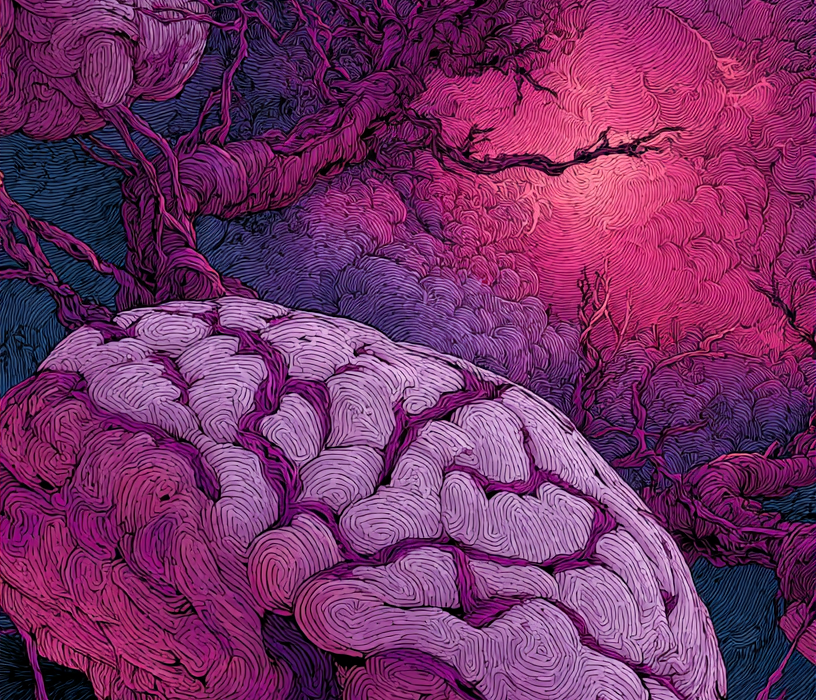
Dopamine and Motivation: What Your Brain Is Really Doing
Posted in :

Dopamine and Motivation: What Your Brain Is Really Doing
Dopamine motivation — the force that gets you out of bed, sends you reaching for your phone, and keeps you scrolling past midnight — is not what most people think it is. The popular version of the story calls dopamine the pleasure chemical. That framing is wrong, and the mistake is not trivial. It shapes how people understand addiction, distraction, ambition, and the quiet erosion of their own will.
Dopamine Is About the Chase, Not the Reward
Dopamine is a neurotransmitter — a chemical messenger — and its primary function is motivation, not pleasure. It fires before the reward arrives, not after. It is the feeling of anticipation, the urgency of the chase, the pull toward something that might feel good. When your phone buzzes, dopamine spikes before you have even read the message. When you smell food, it surges before the first bite. The actual experience of pleasure is handled by different systems entirely. Dopamine is what makes you want. It is not what makes you satisfied.
This distinction matters enormously, because the brain’s dopamine system was not designed for the modern environment. It evolved to motivate behavior in a world of scarcity — find food, pursue a mate, seek shelter. In that world, dopamine served survival. In a world engineered for infinite stimulation, the same system becomes a liability. Researcher Anna Lembke, who studies dopamine and addiction, describes how repeated exposure to high-stimulation rewards gradually desensitizes the brain’s dopamine receptors — meaning you need more input to feel the same pull. The threshold rises. Normal life starts to feel flat. Atomic Habits by James Clear approaches this from the behavioral side — examining how the structure of cues and rewards determines which systems get reinforced, and how tiny environmental changes can redirect the brain’s dopamine loops entirely. It is one of the most practical books available on the mechanics of habit formation.
What a Hijacked Dopamine System Looks Like
You open a social media app to check one thing and surface forty minutes later with no memory of what you were originally looking for. You start a task, feel a faint resistance, and reach for your phone instead — not because you are lazy, but because your brain has learned that the phone delivers a faster dopamine hit than the work does. You eat past fullness not because you are hungry but because the flavor keeps triggering the next bite. You feel strangely hollow after a weekend of entertainment and ease, as if all that stimulation left you more depleted than rested.
None of this is moral failure. It is neurological adaptation. Smartphones, algorithmically curated feeds, ultra-processed food — these are precision instruments for triggering dopamine release. They were built by people who understand the system and optimized for engagement, not wellbeing. The question is not why you struggle to resist them. The question is whether you are aware of what is happening when you reach for them.
Control the Source, Control the Direction
The practical reframe is this: dopamine is not your enemy. It is a steering mechanism. The problem is not the chemical — it is who is choosing the destination. Reducing cheap dopamine sources — the scroll, the constant notifications, the snack that requires no effort — lowers the baseline stimulation your brain is calibrated to. After a period of reduction, slower rewards start to register again. The satisfaction of finishing difficult work. The particular quiet of a walk without headphones. The feeling after a hard training session. These are not lesser experiences. They were simply being drowned out. Reward effort after it happens, not before. Break goals into units small enough that each completion delivers a genuine signal. Let the system work for you instead of against you.
The Real Question Behind the Dopamine Loop
There is a deeper issue underneath the neuroscience. A life organized around cheap dopamine is a life in which you are perpetually chasing the next stimulus without ever arriving anywhere. The Stoics had a name for this kind of restlessness — they called it the failure to distinguish between what you truly want and what merely activates your desire. Seneca wrote about the person who moves from city to city looking for relief, not understanding that they are carrying the source of their unease with them. The stimulus changes. The hunger remains.
Seneca returned to this theme throughout his correspondence — that freedom from compulsion is not the absence of desire, but the development of enough self-awareness to choose which desires are worth following. Letters from a Stoic remains one of the most direct confrontations with this question, written not as philosophy but as advice between people trying to live well in a world designed to distract them.
Dopamine is neither a villain nor a superpower. It is a mechanism, and like any mechanism, what matters is who is operating it. So: who is driving yours?
The full reading list for this topic is at themindofthemasters.com — every book mentioned here.