You Don’t Attract What You Want — You attract what you are
Posted in :

You Don’t Attract What You Want — You Attract What You Are
Most self-help advice gets this completely backwards. It tells you to visualize more, want harder, ask the universe with greater conviction. But wanting has never been the mechanism. Your life doesn’t respond to your wishes. It responds to your identity — and there’s a significant difference between the two.
The Signal You’re Broadcasting
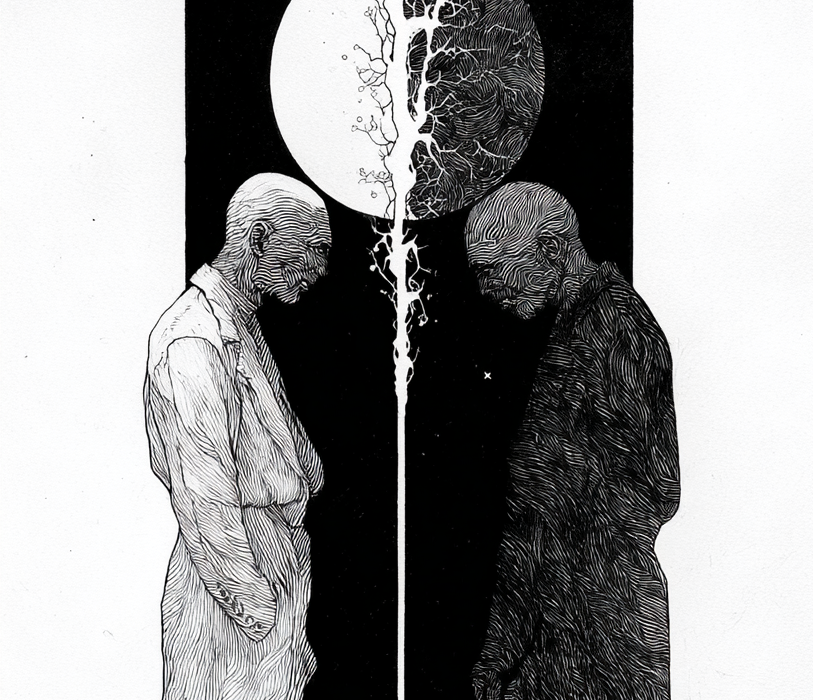
Carl Jung observed that we do not attract what we want, but what we are. This isn’t mysticism. It’s psychology made precise. What psychologists call self-schema — your internal blueprint for who you are — quietly shapes every choice you make, every boundary you hold or don’t hold, every relationship you accept or walk away from. Your self-image isn’t just how you feel about yourself in the mirror. It’s the operating system running underneath every interaction you have with the world.
Think of it like a frequency. You can announce your desires loudly — love, respect, success, peace — but the world doesn’t read the announcement. It reads the signal underneath it. The person who tolerates chronic disrespect isn’t attracting it randomly. Their tolerance is the invitation. The person who carries unresolved wounds isn’t unlucky in love. They’re gravitationally drawn toward situations that press on exactly those wounds, because their nervous system recognizes them as familiar.
Jung explored the mechanics of this in Man and His Symbols — one of the most accessible entries into his thinking, and a book that takes seriously the idea that most of what drives human behavior operates far below conscious awareness.
Where You See It Without Recognizing It
This plays out in ways that are almost uncomfortably recognizable once you start looking. Someone sets a goal to find a more respectful relationship, then finds themselves tolerating the same dynamics six months in with someone new. Someone decides they want to build a serious career, then keeps self-sabotaging right before the moment of visibility. Someone says they want peace, and yet remains magnetically drawn to chaotic people, chaotic conversations, chaotic situations.
The pattern isn’t a coincidence, and it isn’t bad luck. It’s congruence. Your external life is organizing itself around the internal thermostat — the identity setting you’ve accepted, mostly without examining it. The thermostat resets everything back to the familiar, regardless of what you consciously want. You can rearrange the furniture of your life indefinitely, but if the thermostat stays the same, the temperature stays the same.
The Only Lever That Actually Works
The shift isn’t about trying harder or wanting better things. It’s about changing what you are, not just what you pursue. This means examining the standards you hold — not as rules you perform for others, but as genuine expressions of how you see yourself. It means noticing the moments when you override your own judgment to keep someone comfortable, or when you accept less because somewhere underneath you believe less is what you warrant.
When the self-image changes, behavior changes without force. You stop attracting disrespect not because you became more vigilant, but because the part of you that found it acceptable is no longer there.
What You Become, Not What You Chase
There’s a useful question buried in all of this: what would the version of you who already has what you want be doing differently — right now, today? Not eventually. Not after the circumstances shift. Today. That question is more useful than any visualization, because it points at behavior and identity rather than desire.
The life you want isn’t waiting for you to want it enough. It’s waiting for you to become someone for whom it’s a natural outcome. Atomic Habits by James Clear approaches this from a behavioral science angle — his argument that identity change precedes habit change is one of the most practically useful reframes in recent psychology writing, and it maps directly onto what Jung was pointing at from the depth end.
You don’t attract what you want. You attract what you are. Which means the only meaningful question is: who are you becoming?