Why Your Brain Is Wired for Survival (And Not Happiness)
Posted in :

Your Brain Is Wired for Survival, Not Happiness
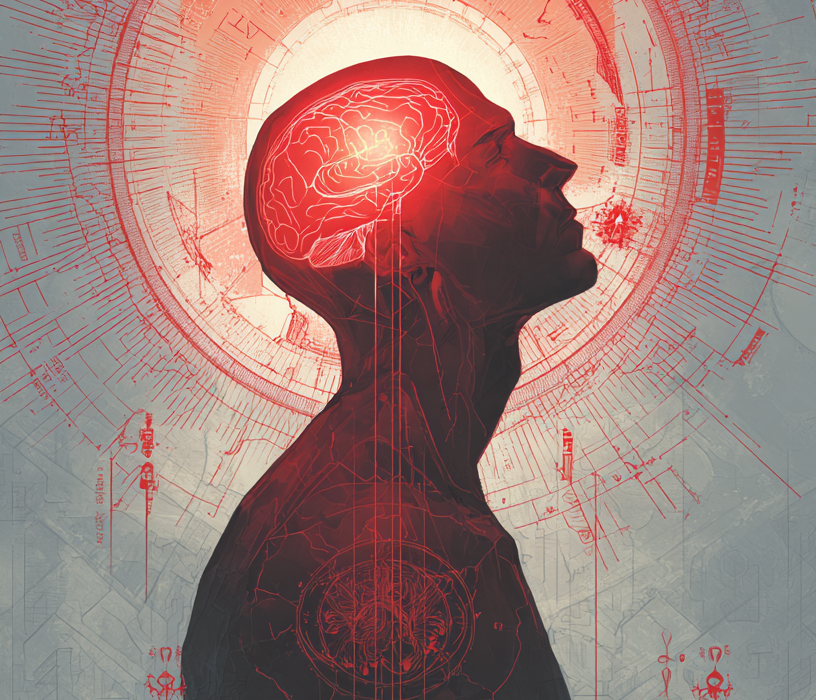
Most people spend their lives chasing happiness, believing it should come naturally. But there’s a deeper truth that changes everything: your brain isn’t designed to make you happy—it’s designed to keep you alive.
Understanding this shifts how you see your thoughts, emotions, and reactions. If you’ve ever wondered why negative thoughts feel stronger than positive ones, or why fear seems to linger longer than hope, it’s not a flaw. It’s your brain doing exactly what it evolved to do.
From the very beginning, survival depended on detecting danger quickly and responding to it. Happiness was never the priority. Safety was.
Why Negative Thoughts Feel Stronger
Your mind is constantly scanning for threats, even in environments where there is no real danger. This is why your thoughts tend to focus more on what could go wrong than what is going right. As Marcus Aurelius observed, “The obstacle is the way.”
Your brain doesn’t relax easily. It stays alert, looking for problems to solve and risks to avoid. That’s why fear tends to stick longer than hope. It’s also why a single negative thought can outweigh several positive ones.
This isn’t weakness—it’s conditioning. Your mind evolved to prioritize pain avoidance over pleasure seeking.
The Illusion of Constant Threat
The challenge is that your brain hasn’t caught up with modern life. It still reacts as if you are surrounded by constant danger, even when you’re safe. This leads to overthinking, anxiety, and imagined worst-case scenarios.
The Stoic philosopher Seneca recognized this centuries ago when he said that we suffer more in imagination than in reality.
Your brain prepares for storms—even when the sky is clear.
This creates a cycle where your mind generates problems that don’t exist, and your body reacts as if they do. Over time, this becomes your default state.
How Awareness Rewrites the Pattern
Here’s where everything begins to change. While your brain may be wired for survival, your awareness gives you the ability to override that default.
You are not your thoughts—you are the one observing them.
The moment you notice a fear-based thought and question it, you interrupt the pattern. Instead of automatically reacting, you create space to respond differently.
This is how you begin to train your mind. Not by eliminating negative thoughts, but by changing your relationship with them. Over time, this reduces the intensity of false alarms and helps your nervous system return to a calmer state.
Happiness Is a Skill You Can Build
If survival is your brain’s default, then happiness becomes something you must consciously develop. It’s not automatic. It’s practiced.
This means choosing where you place your attention. It means recognizing when your mind is creating unnecessary fear and gently redirecting it. It means building habits that support calm, clarity, and presence.
In that sense, happiness is not just a feeling—it’s a skill. And more than that, it’s a form of resistance against the automatic patterns of fear that have been running your mind for years.
So the real question is not whether your brain is working against you. It’s this: are you going to let it run on autopilot, or are you going to take control?
Because once you understand that your brain is wired for survival—not happiness—you can finally start building a life that goes beyond just surviving.